
Table of Contents
When systems go down, the impact goes far beyond simple temporary inconvenience. From lost productivity and missed sales opportunities to reputational damage and increased cybersecurity risks, downtime can be one of the most expensive hidden costs facing businesses in Sheffield each year.
Whether your downtime is caused by hardware failures, cyberattacks, internet outages or human error, even a short period of disruption can have huge consequences. For Sheffield businesses relying on technology to serve customers, communicate with teams, and manage day-to-day operations, minimising downtime is crucial.
What is IT downtime?
IT downtime is any period where a company’s systems, computers, applications, networks or operations stop working or aren’t working as expected. These disruptions can affect internal operations, external communications with clients, or both.
Sometimes, downtime is planned, such as when scheduled maintenance is taking place. A lot of the time, however, it’s unexpected. This can mean software errors, cyberattacks, or hardware failures. While some downtime is unavoidable, businesses can significantly reduce its frequency and impact by taking a proactive approach to IT management, security and recovery.
Common causes for downtime include:
- Hardware failure
- Internet/ network outages
- Software problems
- Cyberattacks
- Human error
- Poor IT maintenance
- Cloud service disruption
Downtime vs. planned IT maintenance
Planned IT maintenance refers to the scheduled periods when software and equipment is intentionally stopped for maintenance, upgrades, or inspections. This type of downtime is strategically organised to minimise disruption and ensure that technology functions correctly and efficiently.
Unplanned downtime refers to unexpected incidents that make technology unavailable for any reason. It can happen anytime and is often due to an oversight with technology.
A short, scheduled maintenance window can help prevent a much larger outage later. By planning maintenance, businesses can choose a time that minimises disruption and notify employees and customers beforehand.
How much does IT downtime cost a business?
The cost of downtime goes far beyond the time employees spend unable to work. A few hours without access to essential systems can quickly result in lost productivity, missed sales, delayed projects and frustrated customers.
The exact cost will naturally vary depending on the size of your organisation and how heavily you depend on technology and the systems affected. However, calculating the potential impact can help you understand why preventing downtime should be a priority.
Lost employee productivity
One of the simplest ways to estimate the cost of downtime is to calculate how much employee time is lost when systems become unavailable.
A basic calculation you can use is:
Number of affected employees x hourly employment cost x hours of downtime = productivity cost
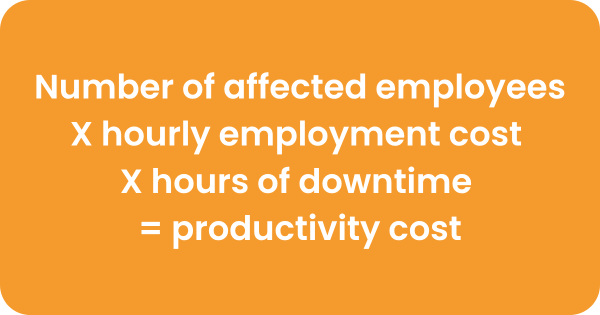
For example, if 20 employees couldn’t work for 3 hours and their average employment cost is £20 per hour:
That’s 20 x £20 x 3 = £1,200
That’s £1,200 in lost productivity before accounting for missed sales, customer disruption, and recovery costs of reputational damage.
Lost sales and revenue
Downtime can also prevent your business from generating revenue. If your sales team cannot access customer records, payment systems stop working, or customers can’t contact you, you’ll also lose out.
For businesses relying on online transactions, even a short outage could mean:
- Abandoned purchases
- Missed enquiries
- Delayed orders
- Missed sales opportunities
- Customers going with a competitor instead
This makes the cost of downtime slightly more difficult to calculate. The longer systems are unavailable, the greater the potential financial impact.
For small to medium businesses in Sheffield where employees often have multiple responsibilities, losing several hours of productive time can have a huge knock-on effect across the rest of the working week.
Customer dissatisfaction
If customers can’t access your services, contact your team or complete a purchase because of an IT issue, their experience can quickly suffer. Repeated disruption can reduce customer confidence, damage relationships, and potentially lead customers to look elsewhere.
Employee frustration
Downtime for Sheffield businesses directly impacts employees. It disrupts workflows, kills productivity and triggers workplace frustration. When technology fails, employees are left unable to perform their core duties, leading to negative professional impacts.
Potential regulatory or compliance consequences
Downtime can also create regulatory or compliance consequences, particularly if the disruption affects access to sensitive data, customer information or systems that your business relies on to meet its legal obligations.
For example, if a cyberattack causes systems to become unavailable or results in personal data being compromised, your organisation may need to investigate the incident and determine whether it needs to be reported to the relevant authorities.
Downtime can also make it harder to meet contractual or industry-specific requirements, particularly if your business has obligations around data security.
Not all consequences are monetary, so it is difficult to gauge exactly what you lose out on when suffering from downtime. The key thing to note is that having reliable backups, appropriate security controls, and a clear incident response plan can help your business bounce back when something goes wrong.
The reputational cost of downtime
If customers frequently experience website outages, delayed responses or disrupted services, they may begin to lose confidence in your business. For Sheffield businesses competing in a local market, repeated IT issues can damage your reputation, reduce customer loyalty and even encourage customers to go with a competitor instead.
How can Sheffield businesses reduce IT downtime?
It’s impossible to fully eliminate the risk of downtime, however, taking a proactive approach can significantly reduce how often outages happen and how long they last. For Sheffield businesses relying on technology every day, prevention is often far less disruptive than dealing with an IT issue after the fact.
Proactive IT monitoring
Regular proactive IT monitoring can help identify potential issues before they cause disruptions. Monitoring systems allows IT teams to spot unusual activity, performance issues and potential failures early.
Keep software up-to-date
Outdated software and operating systems can leave businesses vulnerable to both technical failures and cyberthreats. Regular updates and security patches can fix known vulnerabilities, improve performance and prevent compatibility issues.
Use reliable backups
Protecting your business from data loss via regular backups will help minimise downtime. If files are accidentally deleted, systems fail, or a cyberattack makes data inaccessible, a reliable backup can help your business recover promptly.
Strengthen cybersecurity
Cyberattacks, including ransomware and phishing attacks, can halt operations. Strong cybersecurity measures can reduce the likelihood of an attack and limit its potential impact.
Consider endpoint protection, email security, regular security updates and employee awareness training as part of a wider cybersecurity strategy.
Consider managed IT support
For many SMEs in Sheffield and South Yorkshire, managing IT problems internally can be complicated, especially when there isn’t an internal IT support team there to monitor systems and respond to issues.
Managed IT support takes a more proactive approach, with ongoing monitoring, maintenance, security, and technical support helping to identify and resolve potential problems before they result in significant downtime.
For Sheffield businesses that depend on reliable technology, having the right IT support in place can help reduce disruption, protect productivity and give employees more time to focus on their work.
Frequently asked questions
How much does one hour of downtime cost?
The cost of downtime varies significantly depending on the size of your business, industry, and systems affected. Research cited by Vertex9 estimates that small businesses (10-50 employees) can lose around £1,000 to £5,000 per hour. However, these figures account for direct revenue lost, not the damage often left unspoken, like shifts in employee productivity and loss of trust from clients.
What is the most common cause of IT downtime?
Human error is one of the leading causes of unplanned IT downtime. Various factors can cause downtime, including accidental misconfigurations, improper system updates, improper permissions, misconfigured firewalls, and more.
How can Sheffield businesses prevent IT downtime?
Your business can prevent IT downtime by utilising proactive monitoring, strong cybersecurity, and reliable backup systems. Partnering with an experienced managed IT service provider will help with around-the-clock system oversight to minimise disruption and maximise productivity.
Does managed IT support prevent downtime?
Yes – managed IT support significantly reduces and prevents downtime by replacing reactive repairs with continuous, proactive oversight. Managed IT support in Sheffield can also help you with routine checks, including regular software updates, security patches and threat detection.
Can cybersecurity reduce downtime?
Yes – cybersecurity directly impacts downtime by preventing malicious cyberattacks like ransomware and data breaches that can pause operations.
What should a business do during an IT outage?
During an IT outage, immediately assess the impact, contact IT support, and follow a disaster recovery plan. Don’t have one in place? Our experts can help.
Don’t wait until downtime becomes expensive
Downtime is not just an inconvenience. For growing businesses in Sheffield, even a relatively short period of downtime can affect productivity, revenue, customers and employee time. While it’s impossible to eliminate every single potential cause of downtime, proactive monitoring, cybersecurity, reliable backups and a clear recovery plan can significantly reduce both the likelihood and effect of an outage.
Want to understand how prepared your business is for an IT outage? Our free IT consultation can help you identify potential vulnerabilities, improve your backup strategy and reduce the risk of costly downtime.