
Microsoft has started rolling out numerous productivity features in Teams, one of which has users divided. Earlier this year, they introduced the concept of updating your work location via your organisation’s Wi-Fi, to be rolled out in February 2026. However, many are vocal with their concern about increased employee surveillance and micromanagement. This feature is one of many that aim to enhance the productivity features of its enterprise solutions.
Many credit it to the rising popularity of remote work, which has managers questioning the ambiguity of employees’ locations when joining meetings or completing tasks. While some argue it doesn’t matter where work is completed, as long as it is, others argue it thwarts productivity. Who knows, we could be writing this from a lovely beach in Santorini…
Are we being watched?
Although little information has come out regarding this update, internet users are deliberating. Many suspect location information will be acquired through employees’ IP addresses. This will make it increasingly difficult for users to fake their locations, as employees will need to connect to office Wi-Fi to show they are at work.
The update, will automatically update users’ locations to signal which building they are located in. The feature aims to facilitate office coordination – making it easier to organise meetings. However, users worry that it could also help managers enforce stricter surveillance.
To panic or not to panic…
News outlets and social media users have all expressed concern regarding employee surveillance, with some commenting on Teams “snitching” on you, becoming a “lapdog for your boss”, and believing bosses will spy on employees.
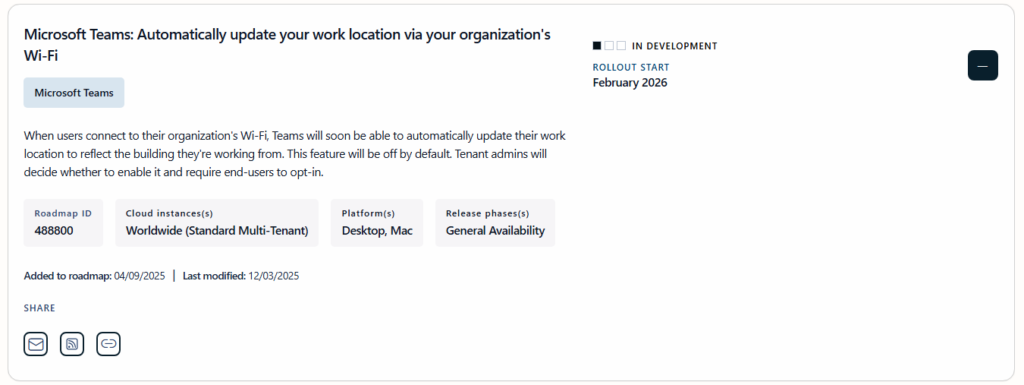
However, according to Microsoft (Roadmap 488800), when users connect to their organisation’s Wi-Fi, Teams will automatically update their work location to reflect the building they are working from. If a user connects to a registered company Wi-Fi network, Team might display their status as “in office” or similar. The feature will be off by default, allowing managers to opt in if they wish.
Indication of a wider change
The goal, according to Microsoft, is to give managers clearer insights into remote and hybrid attendance, with the wider aim being to improve productivity. With over 320 million daily users, Teams is one of the most-relied-on platforms globally for employee collaboration.
It comes during a time of emphasis from Microsoft and Big Tech to push productivity, while they implement their own back-to-office policies. For example, the company implemented a three-day-in-office mandate for all employees within a 50-mile radius, effective early next year. This is one case in a wider shift to the full return to office trend after the boom in remote and hybrid working that COVID-19 initiated. Large organisations like Boots and Rockstar have already reverted to an in-office five-day work week, with more to follow.
The core motivation of this is productivity, and following Amazon’s mass layoffs earlier this year to become “organised more leanly” (meaning productively use AI over human staff), staff are concerned this may be the next step for them.
Microsoft made it clear the feature is intended to make hybrid work coordination easier, to help colleagues see who is physically present at a workplace, rather than to monitor behaviour. This feature isn’t being put in place to exploit, but rather to make it clear if you’re in or out of the office on a chosen day. So, to clear the air, the answer is no, Microsoft won’t snitch on you! It will just let staff know if you’re in or not, so we’ll get back to writing on that lovely beach without stress (that we’re definitely at right now), and you can fear not!
Want further clarification or a helping hand with your Microsoft 365 support or integration? We can help! Reach out to us and let’s chat, no jargon, just honest conversation!